
TRON's quantum migration draft raises a key-rotation blind spot for migrated wallets
A draft quantum-signature design for TRON could leave some migrated accounts able to transact but unable to rotate their keys once legacy signing is switched off.
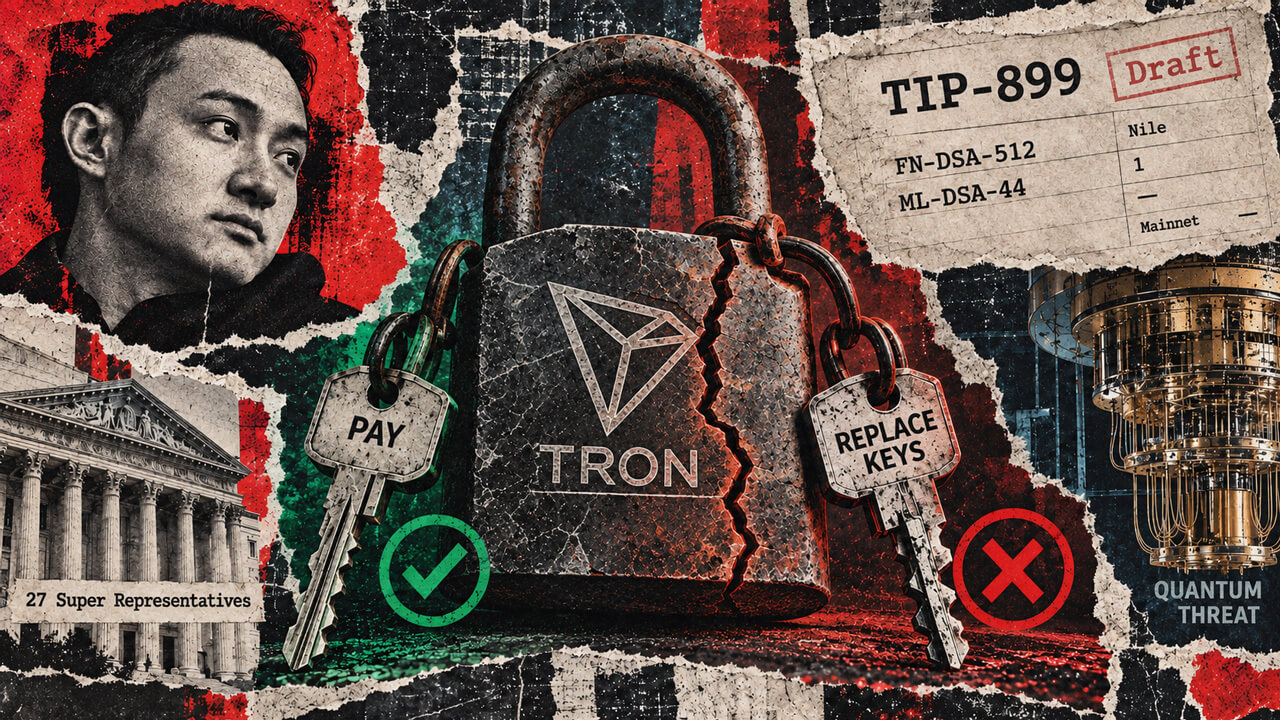
TRON’s draft plan for quantum-resistant signatures is drawing attention to a subtle but important edge case: some accounts that migrate under the proposed design could end up in a state where they can still spend funds yet can no longer replace the cryptographic keys that control them.
What the draft describes
The proposal outlines how the network would transition to post-quantum signature schemes as a defence against future quantum computing threats to existing cryptography. Under the design, governance could eventually disable the older signing scheme that some migrated accounts still rely on. Once that happens, those accounts lose the ability to rotate or update their keys — even though a separate permission system may still let them authorize payments in the meantime.
In other words, the accounts would not be frozen outright, but they would be operating on borrowed time: functional for transacting, yet structurally locked out of any key-management upgrade. The design does sketch a potential recovery path through a second quantum-related mechanism, though the summary of the draft leaves the details incomplete.
Why it matters
Key rotation is a basic security expectation for any blockchain wallet. If a private key is exposed — through a leak, malware, or a compromised device — users rotate to new keys. A design that allows payments but blocks key replacement inverts that safety model. An account with a known or suspected weakness would be unable to remediate it, turning a temporary risk into a permanent one.
This also has governance implications. The decision to disable a legacy signing scheme is a network-level action, but the consequences fall on individual holders who may not fully understand which permission structure their wallet uses after migration. Quantum migration is already a technically fraught process; adding a class of accounts that cannot complete it cleanly raises the stakes.
What to watch
Traders and wallet developers should follow whether the draft clarifies how the second quantum recovery route would work, who qualifies, and whether rotation rights are preserved until migration is fully settled. Expect validators and governance participants to debate timelines for deprecating the old scheme, since that deadline effectively determines when the locked-rotation state could begin. Documentation aimed at ordinary TRON users — explaining which accounts are affected and what steps to take — will be the clearest signal of whether the plan is being tightened before implementation.